How to check APA reference formatting, quickly

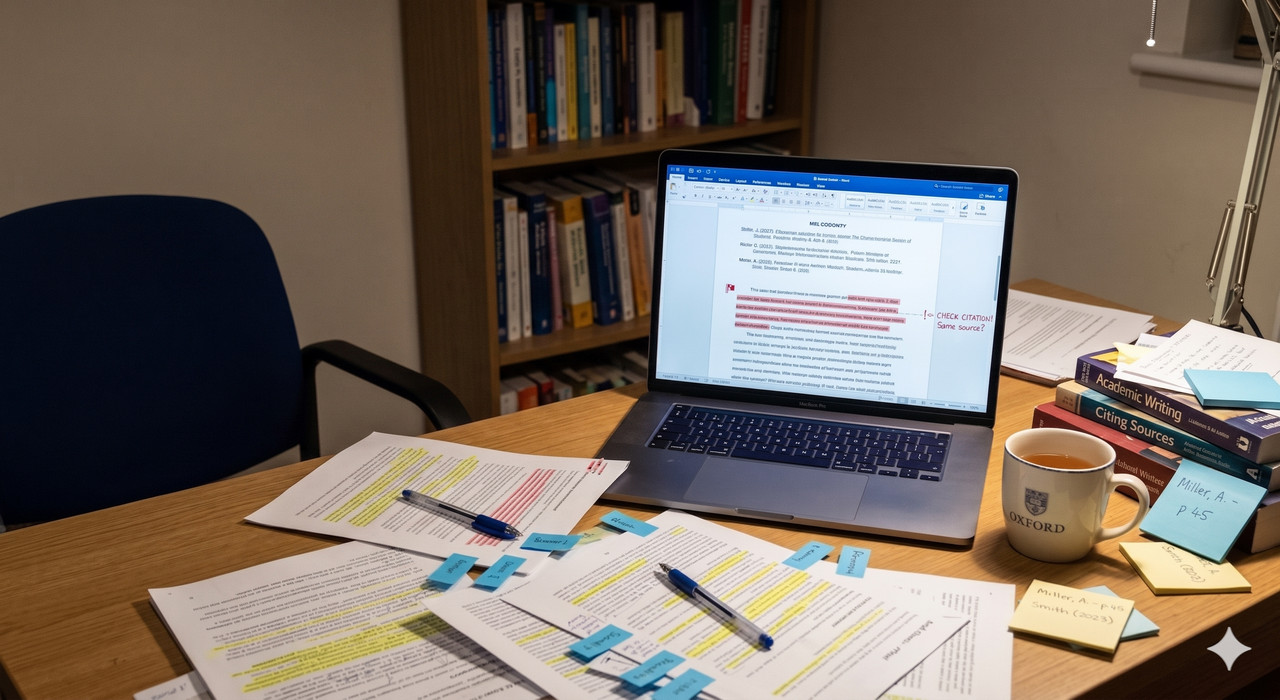
When you’re close to submission, APA formatting can suddenly feel much more stressful. At the writing stage, it’s easy to tell yourself you’ll “sort the references later.” Then later arrives, the deadline is close, and you’re trying to work out whether your in-text citations match your reference list, your reference list is in the correct order, and your DOI links are working and correct.
The good news is that a final APA review does not need to become another major task. If you’re trying to work out how to check APA formatting quickly, the goal is not to (re)learn the entire style guide from scratch. It’s to do a focused, practical final pass that catches the mistakes most likely to cost marks.
This guide is for exactly that: A fast, sensible final look back over your work so you can review your citations, references, and formatting without disappearing into a formatting spiral.
Common APA reference style formatting mistakes
Even careful scholars can make the same handful of errors. These are common APA reference and citation mistakes worth looking for:
- Missing references: A source is cited in the text but never appears in the reference list.
- Orphaned references: A source appears in the reference list but is never actually cited in the text.
- Alphabetical order of references: Confusion over organisations as authors, acronyms and non-significant words, and double-barrelled last names.
- Duplicate entries: The same source appears twice, often in slightly different formats.
- Author name problems: Spelling variations, missing initials, incorrect order, or inconsistent use of diacritics (the little marks, dots, squiggles, or lines added to letters – usually above or below – to change how they are pronounced or indicate a special meaning).
- Date issues: Missing years, mismatched years, or inconsistent formatting of dates such as n.d. or full publication dates where month/day are needed.
- Punctuation and formatting drift: Small inconsistencies in commas, full stops, italics, capitalisation, or hanging indents that make the list look unfinished.
- DOI and URL issues: Broken DOI links, incomplete URLs, or linking directly to a source page when a DOI should be used instead.
- Copy-paste formatting errors: Extra spaces, odd line breaks, strange imported formatting, or references that still carry styling from another database or document.
APA style formatting checklist
1. Every in-text citation must have a matching reference list entry
This is the first thing to check because it is one of the most common submission-stage problems. If you’ve added sources late, moved sections around, or cut paragraphs during editing, it’s very easy to end up with a citation in the body that never made it into the reference list.
2. Orphaned references
The reverse problem is just as common, where a source appears in the reference list but is never actually cited in the final version. These are often leftovers from:
- Earlier drafts
- Deleted paragraphs
- Copied reference manager exports
- “Just in case” sources you never ended up using
It is also worth remembering that an APA reference list is a list of recoverable sources. In other words, the reference list should contain sources that a reader can actually locate and consult. That means some items do not belong in the reference list, even if they were mentioned in your work. For example, personal communications are cited in the text but are not included in the reference list because they are not recoverable by the reader.
3. Author names
When you check your sources, make sure:
- Surnames are spelt correctly and are consistent between the citation and reference list entry
- Initials are present and correctly formatted
- The author order in the citation matches the reference
- Full first names have not slipped in by mistake
- Diacritics are used correctly and consistently
It’s important to be vigilant, as it is surprisingly easy to end up with two versions of the same author name without noticing. “Brown” in your citation and “Browne” in your reference list, for example.
4. Punctuation, italics, and capitalisation
A quick scan of the reference list can reveal a lot. Look for:
- Journal titles italicised correctly
- Volume numbers italicised where required
- Issue numbers formatted correctly
- Article and book titles using the correct capitalisation style
- Missing full stops or commas
- Consistent use of hanging indents
5. Years and date formatting
Dates can cause more problems than people expect. Start with the basics, and check:
- The year is correct and appears where it should be
- Your reference list entry matches the in-text citation
- The same source has the same year wherever it appears
Then check the formatting itself.
If a source has no date, APA uses (n.d.), and that needs to be formatted correctly. Some source types may also need more than just the year in the reference entry, such as a month or a full publication date. In the in-text citation, though, you would usually include the year only.
6. Journal, volume, and issue details
For journal articles, check that the core publication details are complete and in the correct format. That means reviewing:
- Journal title
- Volume number
- Issue number (where there is one)
- Page range or article number, depending on the source
7. DOI and URL formatting
This is not just a cosmetic check. A broken or incorrect DOI can make an otherwise strong reference less useful and less professional. Ensure:
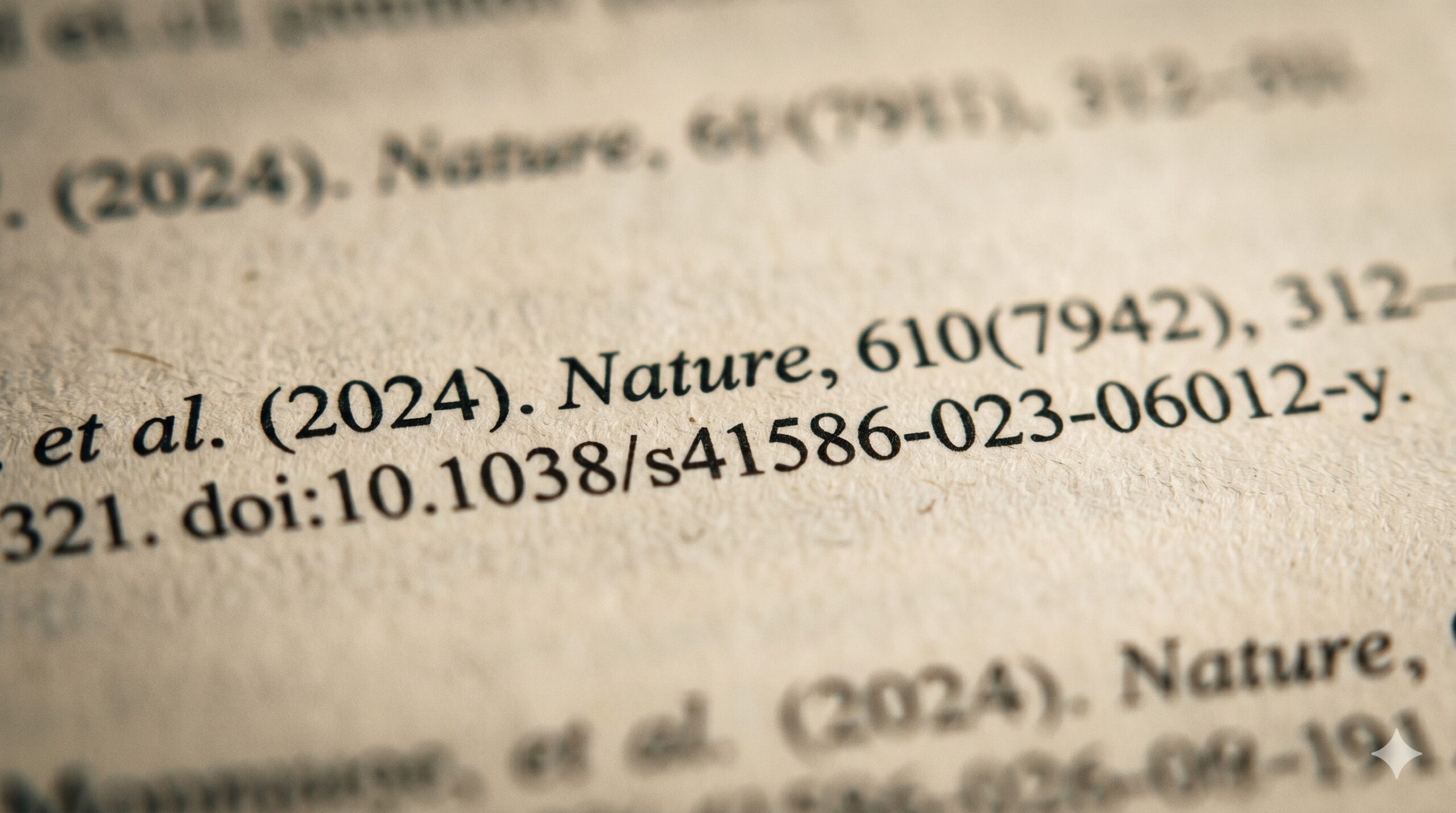
- DOIs are complete and not broken
- The same DOI has not been accidentally repeated across multiple references
- URLs are complete where a URL is genuinely needed
- You are not linking directly to a source page if a DOI is available
As a rule, if a Digital Object Identifier exists, it is usually preferable to use the DOI rather than a standard webpage link. This allows for changes in the original website’s structure, as the DOI never changes; it just gets updated to point to a different location.
When to use an APA reference checking tool instead of doing it manually
There’s nothing wrong with a manual review. In fact, you should always do at least one. You have seen the document too many times. You know what it is supposed to say. At that point, you can’t always see the wood for the trees. That’s where an APA citation checker becomes useful – not because it replaces judgement, but because it helps you spot patterns you may stop seeing when you’re tired. And the good news is that everything we’ve mentioned here in this blog post, Recite can help with.
A good final process is usually:
- Do a short manual review
- Use a tool (like Recite!) for consistency and completeness
- Do one last visual check
That combination is often much more realistic than trying to catch everything manually at the last minute.
Finish strong, with your referencing in order
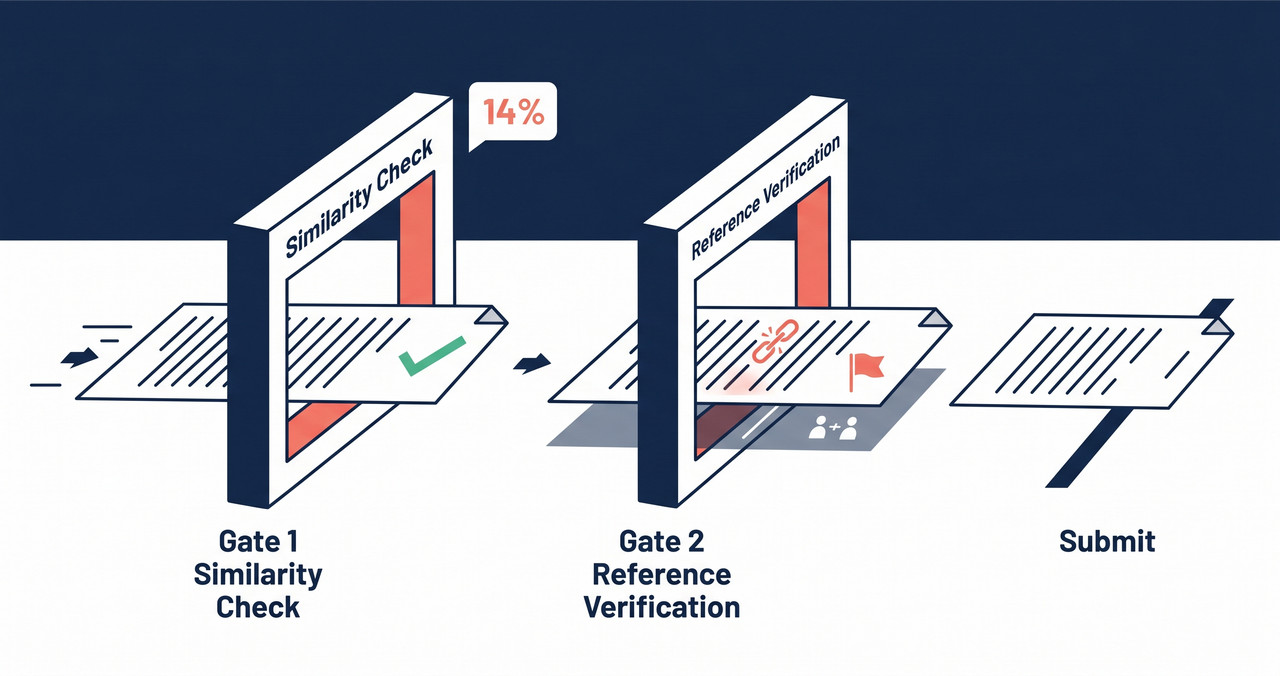
Focus on the mistakes that matter most, check that your in-text citations and reference list actually match, and make sure the version you upload is the one you intended to submit. APA mistakes are often small, but they’re easy to miss when you’re working to a deadline. Before you submit your work, it’s worth doing a final citation and reference check. So why not run your paper through Recite and see what it picks up?
If you’re doing a broader final review, our Dissertation and Thesis Submission Survival Guide covers the full checklist beyond APA – from formatting and proofreading to final file checks before you upload.